China’s Top Scenic World Heritage Sites Wait for You to Explore
Ready to embark on living history? China’s World Heritage Sites will provide an unforgettable entry to 5,000 years of history, where ancient wonder blends along with breathtaking landscape in a way that you’ll simply not be able to put into words.
To be in front of the great wall of China as it meanders over mountain ranges is giving a glimpse of one of the biggest achievements that man has ever done. The Mutianyu section, which is 70 kilometers northeast of Beijing, is the optimal combination of accessibility and real experience. Unlike Badaling (which had a large amount of people especially on a sunny day), Mutianyu is a great alternative to get beautiful vistas and rebuilt watchtowers of the Ming Era. The wall itself, stretching 2.25 kilometers long for tourists visiting, has 22 watchtowers, and cable car access gives all levels of ability access to the wall. Pro tip: adventure out there in autumn when the surrounding forests turn into spectacular scenes of reds and golds, making a photographers dream come true.
Beijing has the best-known and largest preserved palace complex - the Forbidden City - which has 9,999 rooms and is spread on 72 hectares. A walk through the Meridian Gate appears to be an entry into the world of another epoch altogether These days the Palace Museum comprises more than 1.8 million items such as the glamorous Qianlong Emperor armillary and the invaluable paintings of the Song dynasty. The digital reservation system makes it easy to enter, though at least a week’s advance booking is needed during season.
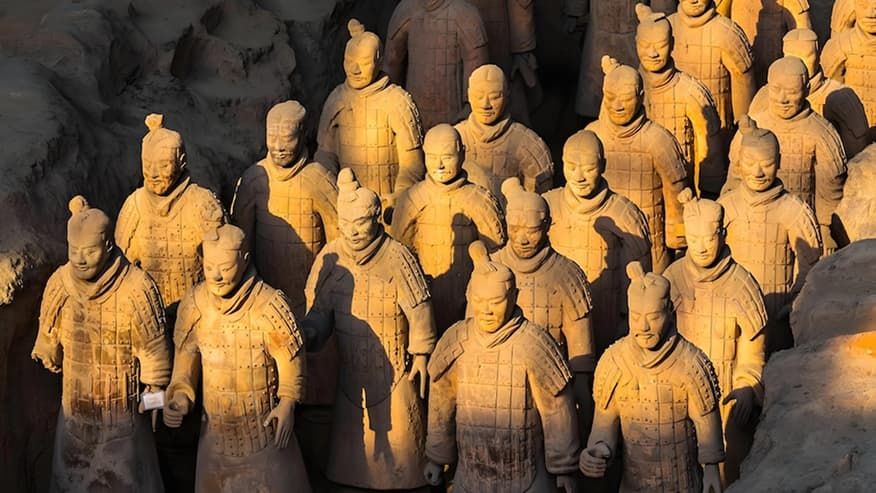
Shaanxi’s Terracotta Army continues to amaze archaeologists and travelers since the day of discovery in 1974. Personal face, hairstyle, and smile differentiate each of the 8,000 warriors – ancient Chinese workmanship in full evidence. Pit No. 1 consists of main battle array of more than 6,000 soldiers, while the smaller Pit No. 2 consists of cavalry and army corps. Two bronze horse-drawn carriages in halves are presented in the Bronze Chariot Museum, with fittings in gold and silver, that speak of finer Chinese metallurgy of Qin Dynasty. Air conditioning facility in the museum maintains ideal temperature as well as humidity for the preservation of these antiquities that are more than 2,200 years old.
Zhangjiajie National Forest Park in Hunan is said to have inspired James Cameron’s floating mountains for his blockbuster film Avatar, but life is more fascinating than any silver-screen fantasy. The park’s 3,000 sand columns rise more than 200 meters into space directly from the earth’s surface, creating a preternatural landscape that is mist-shrouded. The Bailong Elevator is the tallest outdoor elevator in the world and takes its passengers 326 meters up the mountainside in two minutes. The Glass Bridge Zhangjiajie Grand Canyon is 375 meters high and 430 meters long with a heart-stoppingly sheer view perfect to thrill-seeking. This changes often in terms of the weather and there is constant need of waterproof clothing.
The Classical Gardens of Suzhou are the best example of Chinese philosophy of landscape gardening. The Humble Administrator Garden is a demonstration of the ideal balance of water, rocks, plants, architecture that constitute the classical Chinese aesthetics ideals. The water feature found in the center of the garden mimics pavilions used in ancient times, which is why the element of light and shadows is constantly in motion. The Lingering Garden contains the well-known Crown of the Clouds Peak, a 6.5-meter-high limestone sculpture which has been enthralling poets throughout centuries. It has spring that blooms peony and cherry blossom as well as autumn that turns maple trees into fiery canopies.
The Potala Palace in Lhasa is introspective and stands proud at the elevation of 3, 700 meters, 117 meters high above the Lhasa. The magnificent structure of around 1000 rooms houses the burial stupas of eight Dalai Lamas and the artifacts are made with precious stones and gold. The palace has over 10,000 pieces of spiritual objects, ancient scriptures, and mural paintings that detail Tibetan Buddhism’s history. It is a must to climb all 1,080 steps to the top, but the panoramic view from the top over Lhasa Valley is well worth the climb. Thin air at this elevation requires that you take breaks at regular intervals while climbing.
These World Heritage Sites are irreplaceable windows into China’s magnificent cultural history while engaging memories that include today’s travelers in ancient societies. With sacred meaning, imperial majesty, or awe-inspiring nature, China’s World Heritage Sites provide you with life-changing travel that expands your vision about human excellence and nature wonder.