The Story Behind China’s Beloved Chopsticks
For most visitors, China’s first meal comes with a challenge: eating with chopsticks. While knives and forks dominate the West, thin sticks of wood or bamboo are the everyday eating utensils for over a billion people. Let’s look into why chopsticks have such a position of special in Chinese culture and how they came to be symbols of tradition and practicality.
From Ancient Origins to Daily Life
Chopsticks are not modern inventions. Archaeologists have proof that Chinese people were using chopstick-like utensils more than 3,000 years ago during the Shang Dynasty. They were early bronze and used for cooking mainly. With rice, grains, and vegetables becoming the central food, smaller ones emerged as table utensils.
This change gained momentum under the Han Dynasty, when food was already pre-cut into small pieces before cooking to save fuel and time. Chopsticks were perfectly adapted to this type of eating, allowing people to pick up small quantities of food in neat pieces.
Philosophy on the Table
Chopsticks also reflect Chinese philosophy. While knives are symbols of brawn, chopsticks are symbols of harmony and collaboration. Confucian teaching disapproved of sharp knives on the table at dinner, opting for peace instead.
There is a sense of balance, as seen in their design because the two sticks should be in coordination as the yin and yang resonate. Even the proportions, two-third unused above and one-third utilized in food, remind the user of moderation and awareness.
Regional Styles and Materials
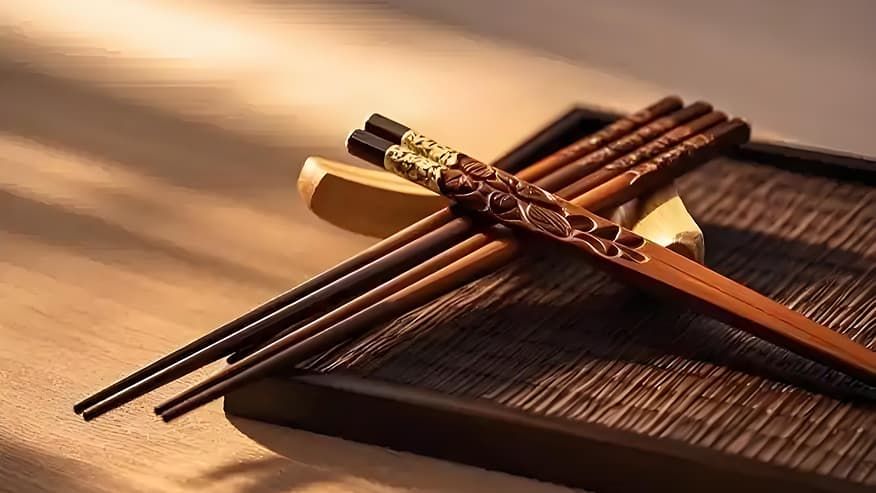
The travelers will observe that chopsticks are regionalized. The most popular, sparing and lightweight is bamboo. Wooden chopsticks too are prevalent, usually lacquered, so that they would last long.
Using long chopsticks is more accepted in northern China, particularly in communal types of hotpots where people reach into a communal hotpot. Southern regions like thinner, shorter chopsticks to comfortably deal with delicate foods such as steamed fish. Such differences demonstrate that local cuisine influences utensils.
Etiquette to Remember
Using chopsticks is an art form as much as it is a considerate cultural gesture. There are things that should be avoided, such as never leaving standing chopsticks in a rice bowl because that resembles incense during funerals. Not directly passing food from one set of chopsticks to another is also taboo, simulating funeral rites when handling bones.
Other habits—tapping chopsticks against bowls, using them as pointers, or idly playing—are likely to seem rude. In between bites, stand them in the holder or place them across the bowl. The locals will appreciate it when they observe foreign visitors demonstrating knowledge of these practices.
Chopsticks in Modern Chinese Life
Chopsticks have persisted as the main tool even in the face of globalization as the default cutlery to be used in Chinese households and restaurants. Even in busy urban areas, disposable versions are available, although numerous individuals now use reusable sets so that they minimise the creation of wastes.
Children usually learn chopstick skill at a young age, sometimes even prior to school attendance. It’s a rite of passage, teaching patience and hand skills. Even scientists observe that using chopsticks leads to more developed fine motor skills, a small yet real benefit of practice.
Trying Chopsticks while Traveling
Tourists are able to interact with the chopstick culture. In regularly visited cities such as Chengdu or Xi’an, many tea houses and restaurants are teaching etiquette, especially when it comes to using chopsticks. Souvenir stores stock embellished sets of bamboo, wood or metallic that sometimes have auspicious marks engraved on them hence useful and symbolic trinkets.
It is easy to have a try while sharing a local family meal. Even clumsy attempts are welcome as an act of hospitality. Local hosts will guide you, making a modest dinner into a cultural exchange.
A Cultural Symbol to Savor
Simple as they seem, there is much story behind chopsticks, a lot of history, philosophies and symbolic considerations. They denote Chinese principles of harmony, balance, and utilitarianism and keys to partaking in some of the most acclaimed cuisines globally.
To visitors, learning how to use chopsticks is not just the art of using the utensil but means of coming to grips with daily Chinese culture. So when you take a seat at any Chinese restaurant anywhere, take hold of those two sticks in good faith and respect. They are not the eating tools they appear to be—they are a direct link to China’s living culture.