China’s Bathhouse Rituals Every Traveler Should Experience
From seeing the Great Wall to savoring local dishes, there are tons of iconic experiences to be found in China for international visitors. However, one of the most immersive forms of Chinese day-to-day leisure might lie a little bit far outside the realm of public consciousness, in a Chinese bathhouse. Modern bathhouses – locally known as x�yù zh�ngxīn – now combine bathing with hot pools, saunas, massage, cuisine, entertainment and relaxation. Several hours at a bathhouse may be normal for people in northern China, more like a social activity than a luxury.
But it may be confusing to a first-time foreign visitor. Why bathhouses are divided by sex? Should your clothes be taken off? What's next for after the bath? And what exactly is cu� zǎo, the famous Chinese body scrub? Knowing the customs ahead of time can make an experience that might otherwise seem strange, one of the most memorable aspects of a trip to China.
What Exactly Is a Chinese Bathhouse?
A Chinese bathhouse is much more than just a spa where people can take a bath. Conventional public bathhouses have developed into expansive leisure complexes, and one can spend an afternoon or evening or, sometimes, an entire night in the bath of these.
A modern facility can have showers, hot and cold pools, saunas, steam rooms, massage rooms, foot-care, restaurants, lounges, cinemas, gaming areas, reading areas and sleeping areas. Many large establishments have the option of operating late which allows customers to chill out for hours unlike their previous bathe then leave option.
This is what distinguishes the Chinese bathhouse from the typical Western bathhouse. It's not just about an individual treatment or luxury treatment. Rather, bathing becomes a larger leisure activity that encompasses conversation, relaxation, socializing, and food.
Your First Visit From Entrance to Exit
The process is generally straightforward once you understand the layout.
1. Check In and Receive a Wristband
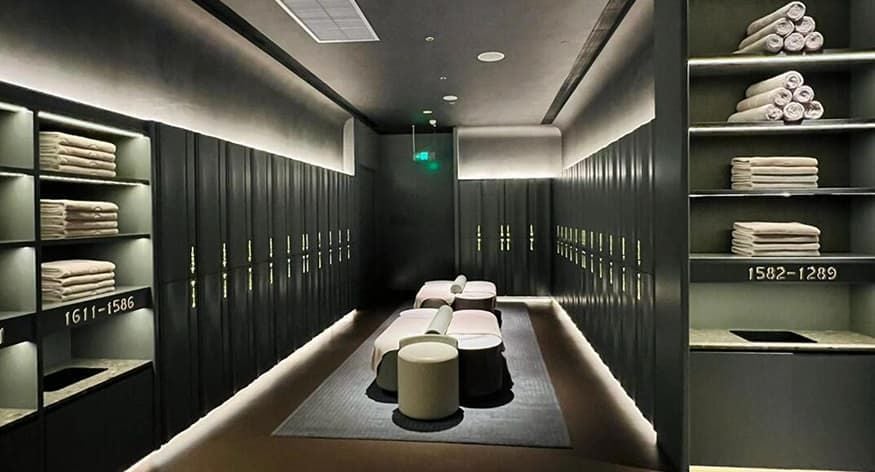
At reception, you normally pay an entrance fee and receive a locker key, often in the form of a wristband or electronic tag. Depending on the venue, additional services and food can be recorded against the wristband and settled when you leave. Bring your passport, particularly when visiting a large venue that requires identification for registration.
2. Enter the Gender-Separated Bathing Area
Typically, the wet areas are segregated into men's and women's sections. This is usually where first timers will find the greatest culture shock: the communal bathing areas are often left uncovered.
This can be a bit awkward, at first, for those visitors who are used to wearing swimsuit at the public pool or spa. But here nudity isn't seen as provocative, it's functional. People tend to devote most of their time to taking baths and resting instead of observing others.
Before visiting, if the communal nudity is of concern, please try to find a place with private bathing rooms or other private facilities.
3. Shower Before Entering the Pools
This is arguably the most fundamental rule of etiquette.
Always shower before entering a communal pool, hot spring, sauna or soaking area. It is important in the Chinese bathing culture to keep shared water clean – if you forget to do this, staff or other guests may remind you.
There are also some traditional hot-spring facilities with their own regulations on buckets, ladles and washing spaces. The basic rule is that anything used for cleaning should stay clean, and shouldn't soak up communal bathing water.
4. Soak, Steam, and Relax
After cleaning, you can have access to available pools. Depending on the facility, one would expect several temperatures, cold plunges, herbal baths, saunas, and steam rooms.
If you're a novice on hot bathing, don't go into the hottest pool—that's something to be done gradually. Very hot water may cause dehydration or dizziness if exposed for long periods of time, so take breaks and take water. Classic hot-spring advice also suggests that the hot-spring should not be taken for extended periods at very high temperatures.
The Famous Chinese Body Scrub
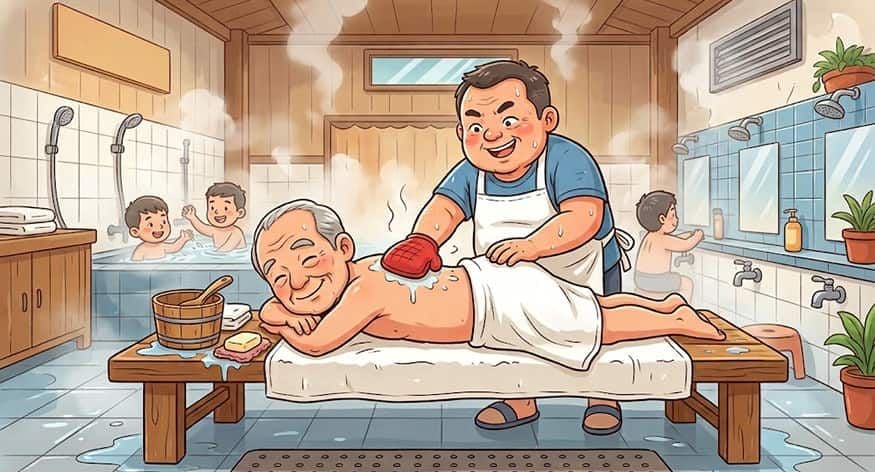
Cu� zǎo, which is often described as a Chinese body scrub, is one of the most distinctive bathhouse experiences.
An attendant scrubs the skin with an exfoliating cloth or mitt, albeit with much more force than a visitor could apply to a Western spa treatment. It is designed to provide deep cleansing and exfoliation and the treatment can give super soft skin.
The secret is you don't even need to try it. Feel free to ask the attendant for gentler treatment if you desire. The expression qīng yì diǎn – ‘a little gentler’ – is helpful. Respond quickly if it is uncomfortable, don't just put up with it.
People with sensitive skin should opt for a less abrasive scrub or ask for something less intense.
What Happens After Bathing?
That's when many international guests start to understand that the typical Chinese bathhouse is more like a leisure resort than a regular public bath house.
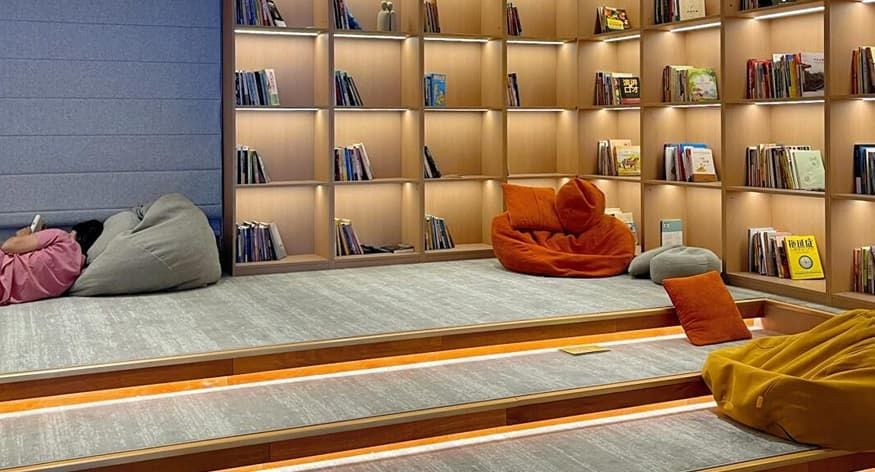
Once outside the wet room, guests usually change into loose bathhouse clothes or soft pyjamas provided by the area. The clothing changing areas are also divided into separate sections for men and women, which are shared with other customers of the same gender, allowing them to proceed directly to the public lounge (open to both men and women) for entertainment after changing.
Depending on the venue, you might then:
- Eat at a buffet or restaurant
- Relax in a reclining chair
- Watch a movie
- Play games
- Read or use an internet area
- Book a massage or foot treatment
- Rest or sleep overnight
Extended visits are not unusual, especially in some large bathhouses which are built for that purpose.
A Few Smart Tips Before You Go
Look for good reviews and a reputable facility and be sure to read their rules before you come. For anyone heading to a smaller city, it's specially handy to verify that the venue is international and has a registration procedure that you're able to handle.
Bring your passport and don't bring valuables into the wet area. Most large bathhouses provide towels, toiletries, slippers, lockers, and clothing for the dry areas, although amenities vary by establishment.
Most important, leave yourself plenty of time. No bathhouse has to be an activity you fit into between two of your site visits. It is about slowing down: bathing, eating, sleeping, gossiping and enjoying a slice of the day-to-day Chinese leisure activities.